

Was the U.S. Men's National Team's World Cup Run a Disappointment?

When the 2026 FIFA World Cup began, expectations for the U.S. Men's National Team (USMNT) were unlike any in recent history. Playing on home soil with one of the deepest and most talented player pools the program has assembled, simply advancing out of the group stage was never going to satisfy supporters. The Round of 16 exit to Belgium leaves a simple question: was this tournament a disappointment?
The answer depends on where you place the benchmark.
The Case for "Yes"
By almost every objective measure, this team fell short of its potential.
The United States has spent the better part of a decade investing in player development, producing a generation of talent competing in Europe's top leagues. Christian Pulisic, Weston McKennie, Tyler Adams and others entered their collective prime just as the nation hosted the tournament. The expectation wasn't merely to participate—it was to challenge the world's elite.
Instead, the Americans were convincingly beaten 4-1 by Belgium in the Round of 16.
Tournament football is often defined by moments, and the U.S. struggled in the final third when it mattered most. Injuries, poor decision-making, and roster selection all played their part. Additionally, the absence of a consistent, clinical No. 9 became increasingly apparent as the competition progressed. While every roster decision carries tradeoffs, the lack of finishing quality ultimately limited the team's ceiling against elite opposition.
The Case for "Not Entirely"
Context matters.
Belgium remains one of the strongest squads in world football, and knockout tournaments rarely forgive mistakes. The United States reached the Round of 16 by navigating the second-hardest path in the competition. They again demonstrated that it belongs among the world's competitive second tier, but still have a lot of work to approach an elite level.
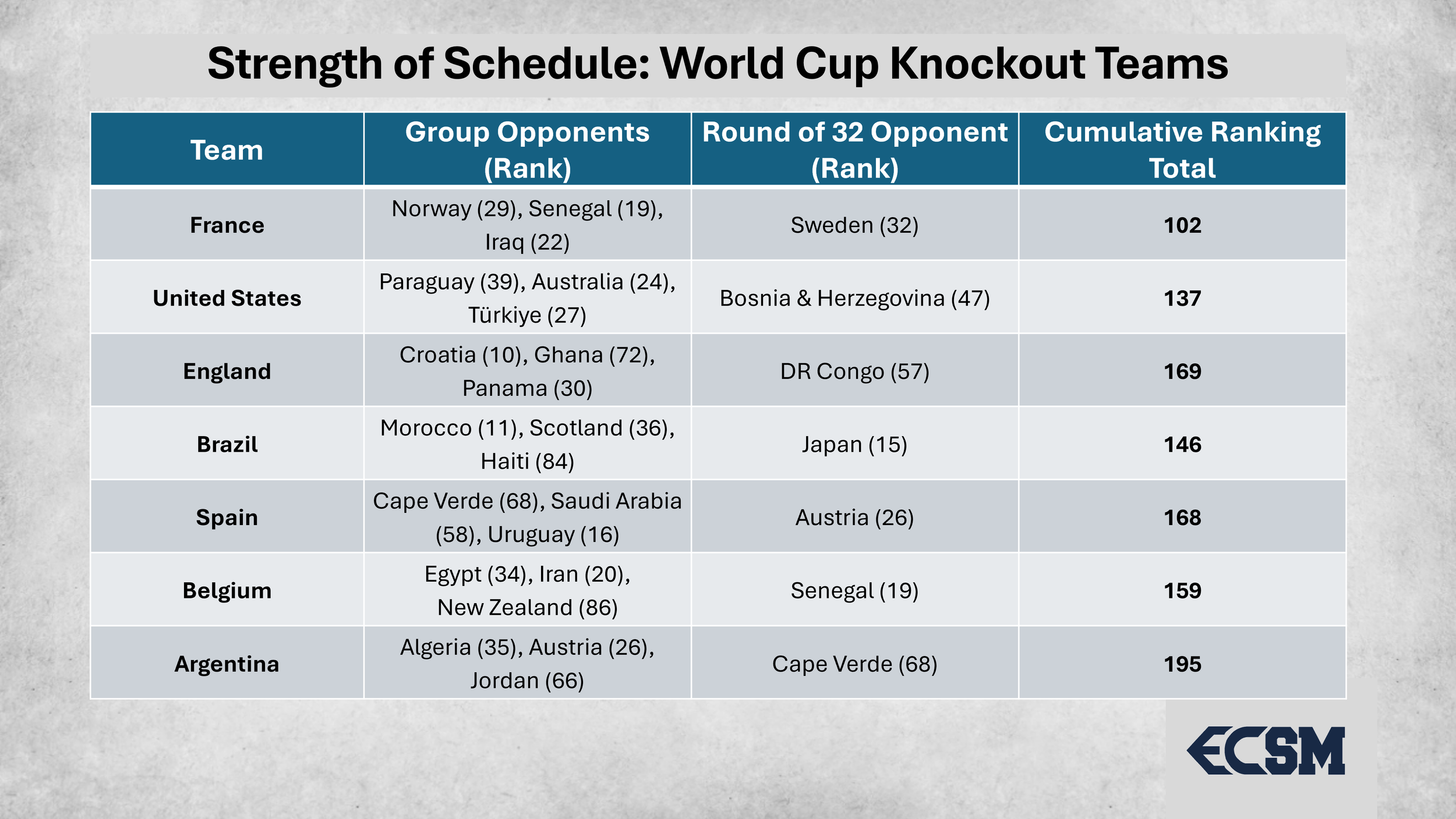
There were positives beyond the final scoreline. The U.S. continued to show improved technical quality, greater tactical flexibility, and increasing depth compared with previous World Cup cycles. The domestic game also benefited from record attendance, heightened media attention, and renewed interest in player development at every level.
Those are meaningful gains that should not be dismissed because of one disappointing evening.
The Verdict
Ultimately, this World Cup feels less like a failure than a missed opportunity.
The standard for the U.S. has changed. Advancing to the knockout stage is no longer enough when a talented, experienced squad is playing a home World Cup. Expectations have risen because the program has earned them.
Perhaps the greatest disappointment wasn't the result itself, but that the tournament ended before the United States could fully capitalize on the commercial and cultural momentum that accompanies a deep World Cup run. Every additional match would have extended media attention, sponsor activation, youth engagement, merchandise sales, and television audiences—benefits that ripple across the entire American soccer ecosystem.
At the same time, one tournament should not redefine the trajectory of American soccer. Success at the international level is built over multiple cycles, not a single summer.
The challenge now is converting potential into results. If the lessons from 2026 lead to sharper roster construction, more ruthless finishing, and greater consistency in high-pressure matches, this World Cup may ultimately be remembered not for where the United States finished—but for the standard it established going forward.

Aaron Studwell, Ph.D., is Founder and President of EC Sports Management. A U.S. Soccer Federation-approved Intermediary, he represents athletes and develops sponsorship partnerships across motorsports and soccer.
To learn more about our EC Sports Management’s football (soccer) clients,
click here to contact us.